
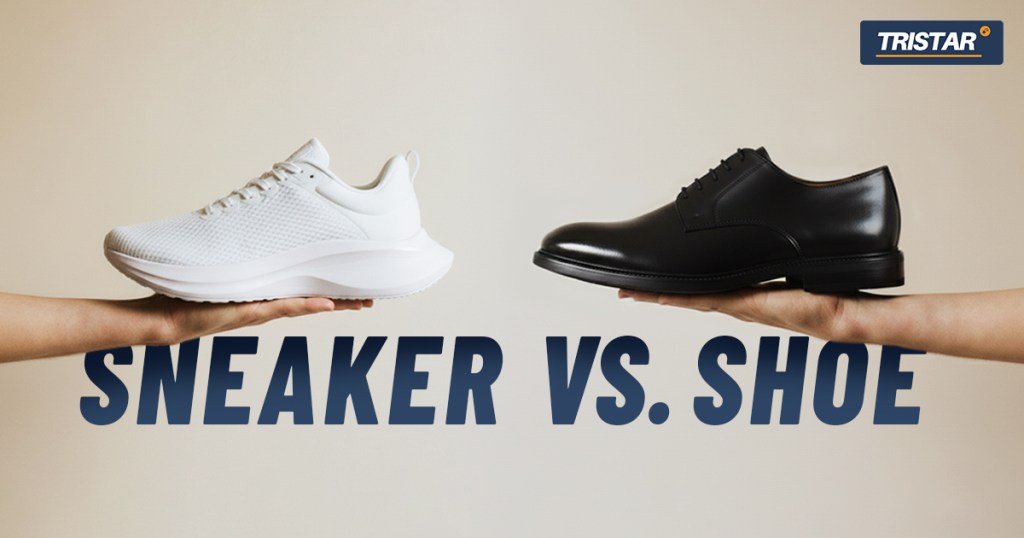
what makes a shoe a sneaker?
In short, sneakers are casual, comfy, active shoes.
A sneaker is a kind of shoe. But not all shoes are sneakers.
Merriam-Webster even defines a sneaker as “a sports shoe with a pliable rubber”. That hint about the rubber sole is key.
Sneakers are built for comfort: they usually have thick foam midsoles and rubber bottoms so they cushion every step. They’re the shoes you lace up for walking, running, or just hanging out.
Other shoes – like dress shoes, boots, or loafers – might use leather or hard soles and are often made to look polished or to fit formal outfits.
Sneakers vs Shoes: Quick Comparison
Here’s a quick side-by-side snapshot of how sneakers generally differ from other types of shoes:
| Aspect | Sneakers | Shoes |
|---|---|---|
| Purpose | Casual or athletic wear for comfort and movement. | Formal, business, or rugged use; broader category. |
| Construction | Flexible build (strobel, cupsole, or vulcanized). Mostly glued or molded. | Structured and stitched (cemented, Blake, or Goodyear welt). Built for strength. |
| Midsole / Outsole | Thick foam midsole (EVA or PU) + rubber outsole for cushion and grip. | Thinner leather or rubber sole, firmer and more supportive. |
| Upper Materials | Light and breathable (mesh, knit, canvas, soft leather). | Heavier, structured materials (full-grain leather, suede). |
| Comfort | Soft and flexible right away; minimal break-in. | Firm at first, molds to foot over time. |
| Durability / Repair | Not resoleable; meant for daily comfort and replacement. | Long-lasting; can often be resoled and repaired. |
| Best For | Everyday wear, travel, and casual activities. | Formal occasions, office wear, or rugged environments. |
Shoe vs. Sneaker: Materials & Construction Differences
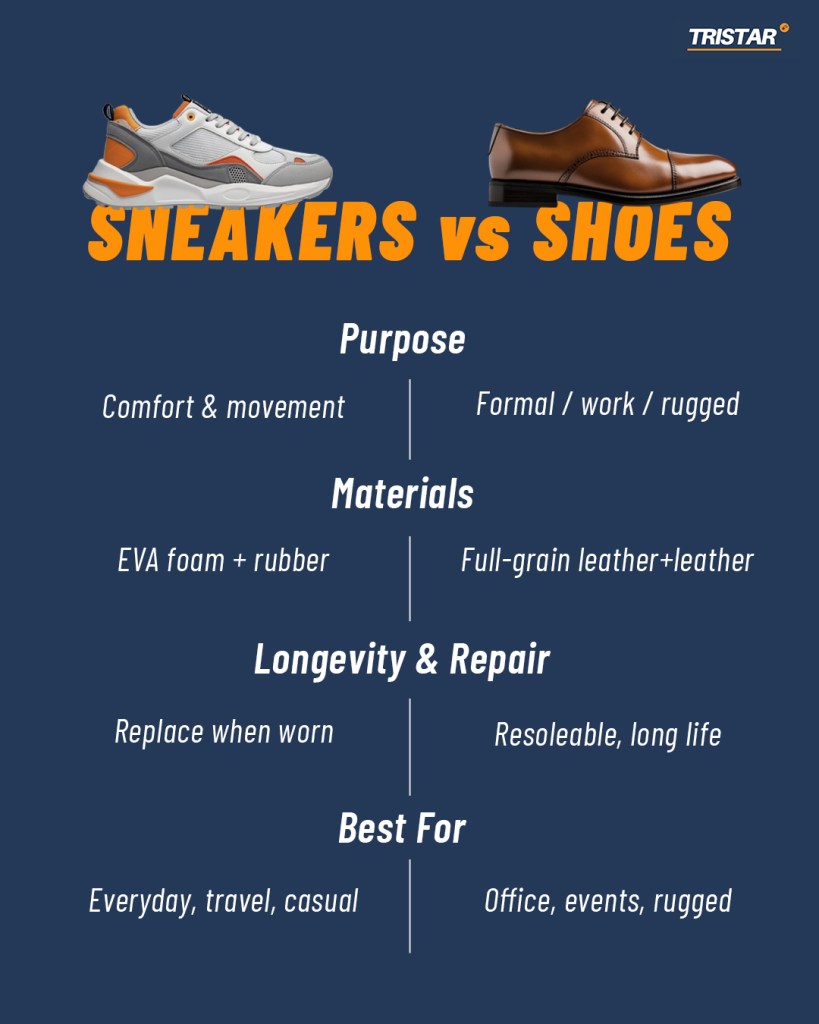
Sneakers — built for comfort and movement
Sneakers are designed to feel soft, light, and flexible — like something you can wear all day without thinking about your feet.
Most sneakers use what’s called strobel construction, where the upper part of the shoe is stitched to a thin fabric “sock” before the sole is attached.
This makes the shoe easy to bend and move with your foot — perfect for walking, running, or casual wear.
Learn more about strobel with the excellent video by the shoes maker academy:
The midsole, which sits between your foot and the ground, is usually made of EVA or PU foam. Think of it like a squishy cushion that absorbs shock every time you step. That’s why sneakers feel springy and comfortable.
The outsole (the part that touches the ground) is almost always rubber. Rubber gives good grip, lasts a long time, and protects your feet from hard surfaces. In factories, it’s often molded directly onto the shoe to make one strong, lightweight piece.
For the uppers, sneakers use breathable materials like mesh, knit fabric, or lightweight leather. These keep your feet cool and make the shoe flexible. Even when leather is used, it’s usually soft and thin — comfort comes first.
In short, sneakers combine soft foams, rubber soles, and airy fabrics to give you that all-day, easygoing feel.
Shoes — built for structure and longevity
Traditional shoes, like dress shoes or boots, are made for support, shape, and polish. They’re stiffer at first but last much longer.
Their construction often involves stitching the upper, insole, and sole together. Premium shoes use Goodyear welt or Blake stitch methods — basically layers of stitching that make the shoe strong and easy to repair later. If the sole wears out, you can take it to a cobbler and get it replaced.
The soles are usually made from leather or rubber. Leather soles look elegant and mold to your feet over time, while rubber soles add traction and durability (and are better for rainy days).
Uppers on dress shoes are often made from full-grain leather or suede — tougher and heavier than sneaker materials.
Inside, many have a leather lining, heel counter, and a shank (a small piece that supports your arch) to keep the shoe’s shape.
That’s why leather shoes start out firm: they need a short “break-in” period. But once they adjust to your foot, they can feel surprisingly comfortable — and they’ll last for years if you care for them.
In short: Sneakers are about comfort and movement, while classic shoes are about longevity and craftsmanship.
FAQs
What makes a shoe a sneaker?
A sneaker is a casual or athletic shoe with a rubber sole and cushioning, made for comfort and daily wear. It’s usually light, flexible, and uses breathable materials like mesh or canvas.
Sneakers and shoes difference?
Any lace-up athletic or casual shoe with a soft rubber sole — like running shoes, tennis shoes, or trainers — counts as a sneaker.
Are sneakers casual shoes?
Yes. Sneakers are casual by nature, meant for comfort and informal settings. Some minimalist styles can fit smart-casual looks, but not formal occasions.
