

Strobel-Lasted vs Board-Lasted Construction
From a manufacturing standpoint, strobel lasting and board lasting are two core methods used in footwear production.
Each impacts comfort, structure, labor, and tooling costs differently — and understanding both helps you make better sourcing or design decisions.
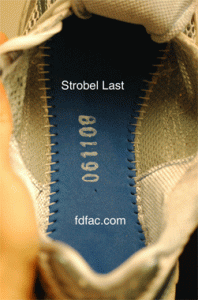

1. Process Comparison
| Step | Strobel-Lasted Construction (Typical in Sneakers) | Board-Lasted Construction (Common in Dress & Outdoor Shoes) |
|---|---|---|
| Base material | Soft strobel fabric stitched to the upper | Fiberboard or paperboard fixed to the last |
| Upper attachment | Sewn to the fabric base (no nails or tacks) | Upper is pulled and glued/nailed over the insole board |
| Midsole/outsole bond | Directly cemented or molded | Added after the board is fully secured |
| Flexibility | Very high – designed for natural foot movement | Lower – prioritizes structure and support |
| Production flow | Fast, fewer steps, suitable for automated lines | Slower, more handwork, suitable for premium shoes |
| Common use | Sneakers, trainers, lifestyle footwear | Leather shoes, hiking boots, stability shoes |
2. Efficiency & Cost Comparison
This table helps sourcing or product teams choose the right construction based on volume, price point, and brand positioning.
| Aspect | Strobel-Lasted | Board-Lasted |
|---|---|---|
| Production speed | Very high (often 15–25% faster) | Moderate (more steps, more handling) |
| Labor intensity | Lower – fewer manual operations | Higher – pulling, lasting, nailing/gluing |
| Material profile | Foam midsole + rubber outsole; textile/mesh uppers | Fiberboard insole + leather/suede uppers |
| Tooling investment | Higher (molds for EVA/PU/cupsoles must be amortized) | Lower (less outsole tooling, more labor-driven cost) |
| Durability/repairability | Good for daily wear, usually not resoleable | Better structural retention; some models can be resoled |
| Comfort feel | Softer, flexible, sneaker-like ride | More structured, stable, sometimes needs break-in |
| Best use | High-volume sneakers, athleisure, travel | Premium dress/casual, outdoor/stability footwear |
3. Key Takeaway
Strobel lasting prioritizes comfort, light weight, and production efficiency, so it is the preferred option for mass-market sneakers and lifestyle footwear. Board lasting prioritizes structure, foot support, and shape retention, so it is better for formal shoes, outdoor boots, or any product positioned at a higher craftsmanship level.
For sourcing teams, the practical rule is: if volume is high and the outsole is moulded, strobel is usually more economical; if the brand positioning requires leather, structure, or repairability, board lasting is more appropriate.
The Shoemakers Academy’s video on Youtube has a very detailed picture and shoe details that explain the difference between Strobel and Board Lasting.
Ready to Skip These Complications? Just Ask Us!
Starting a shoe business is exciting—but managing samples, tooling, QC, and shipping can feel overwhelming. You don’t have to do it alone.
Tristar helps you move smoothly from idea to production-ready. We’ll guide you through construction choices, sourcing countries, MOQs, and timelines—so you can focus on growing your brand, not chasing factories.
We’ll review your design, confirm the best sourcing plan, and share an RFQ checklist to get you started. Everything stays confidential—NDAs included.
Whether you’re sketching your first pair or scaling your label, Tristar makes production easier, faster, and stress-free—so you can see your shoes on shelves sooner.