
Want to know what makes truly sustainable shoes?
We go beyond the green labels and brand promises to uncover the real materials, processes, and challenges behind eco-friendly footwear—straight from the factory floor.
Here’s what most articles miss, and what brands must understand to design truly sustainable shoes that scale.
What Makes a Shoe Truly Sustainable?
Real sustainability involves the full lifecycle of a shoe — from the raw materials to the factory floor, to how long the shoes last, and even what happens after you’re done wearing them.
Here are the five key factors that make a shoe truly sustainable:
1. Sustainable Shoe Materials

This Kane Footwear shoe is made of BounceBack foam, created from Brazilian sugarcane.
Sustainable shoes often start with better materials—like organic, renewable, or recycled components.
- Organic materials (like GOTS-certified cotton) are grown without harmful pesticides.
- Renewable materials include sugarcane-based EVA foam, which replaces petroleum-based plastics.
- Recycled materials, such as GRS-certified polyester or upcycled rubber, help reduce landfill waste and energy used in virgin material production. Adidas, through its Parley for the Oceans initiative, uses recycled ocean plastics in several sneaker lines.
But there are trade-offs.
Recycled materials can be harder to source in bulk, may not perform the same, and can cost more—especially when certified by credible standards like GOTS, GRS, or LWG.
2. Energy, Water & Emissions in Production

Sustainable energy, sustainable shoes.
Factories play a huge role in a shoe’s environmental impact.
Sustainable production means:
- Switching to renewable energy sources such as solar panels, especially in countries like Vietnam and Taiwan where solar infrastructure is growing.
- Improving cutting efficiency with 3D-knitting or AI-powered layout software to reduce off-cut waste.
- Treating wastewater to remove chemicals before releasing it, a process critical in tanneries and dye houses. The Leather Working Group (LWG) offers a globally recognized protocol for this.
Some manufacturers even adopt zero-waste practices, where leftover materials are collected and reused in future batches—minimizing landfill waste.
3. Labor & Factory Conditions
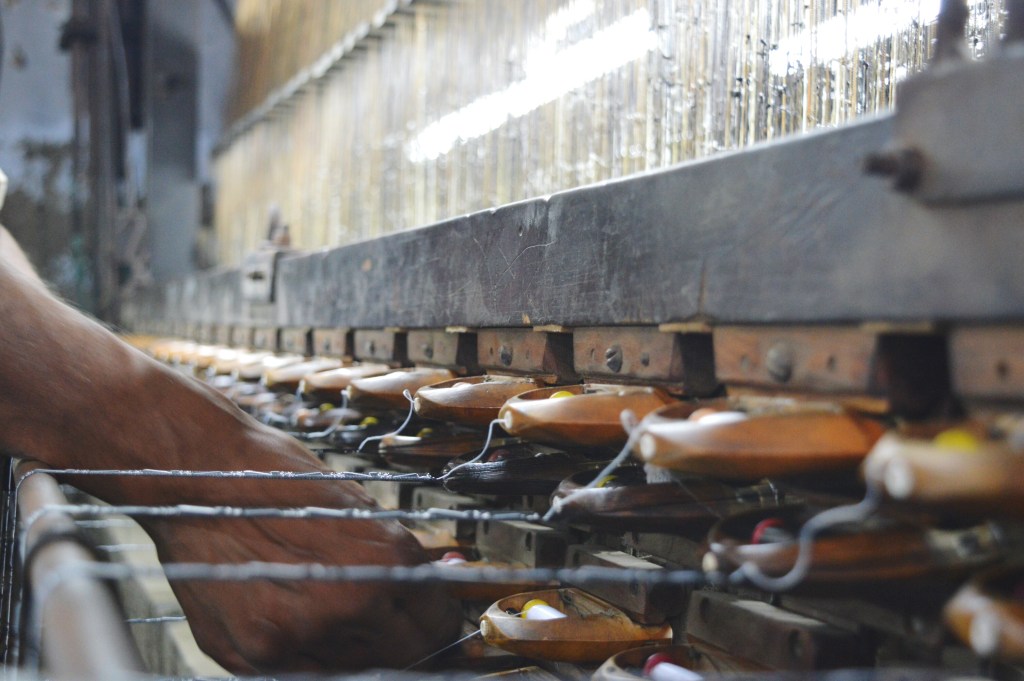
Sustainability isn’t just about the planet—it’s about people.
Responsible factories ensure:
- Safe working conditions (e.g., reducing exposure to glue fumes and solvents)
- Fair wages and ethical labor standards
- Third-party audits like BSCI or SMETA
This part is often overlooked in marketing—but it’s critical for a shoe to be truly sustainable.
4. Durability & Repairability

The longer a shoe lasts, the less waste it creates.
Shoes made with high-quality construction, strong stitching, and wear-resistant outsoles have a lower lifecycle impact.
Some brands go further by offering resoling or refurbishment programs, keeping shoes in use longer instead of sending them to landfills.
5. End-of-Life & Circularity

Timberland debuts latest TIMBERLOOP™ shoe, built for circularity.
Forward-thinking brands now design shoes that are easier to disassemble, recycle, or even compost.
- Thousand Fell builds its sneakers with modular components and water-based glues, making them easier to recycle. They also operate a closed-loop recycling program, incentivizing customers to return worn-out shoes.
- Timberland’s Timberloop Trekker is designed to be taken apart and fully recycled, and the brand offers take-back services across the U.S. and Europe.
Still, terms like “biodegradable” can be misleading—biodegradable shoes only break down in the right industrial conditions, which aren’t widely available.
3 Popular Sustainable Shoe Brands—Deconstructed by a Manufacturer
For manufacturers and sourcing partners like us, sustainability means understanding how these materials behave on the production line, how scalable the design is, and what risks brands need to watch out for before scaling.
Let’s take a closer look at three popular sustainable shoe brands—Allbirds, Veja, and Thousand Fell—
and examine what they’re doing well, what challenges they face, and what brands can learn before trying to replicate their models.
Allbirds: Natural Materials + Carbon Accounting
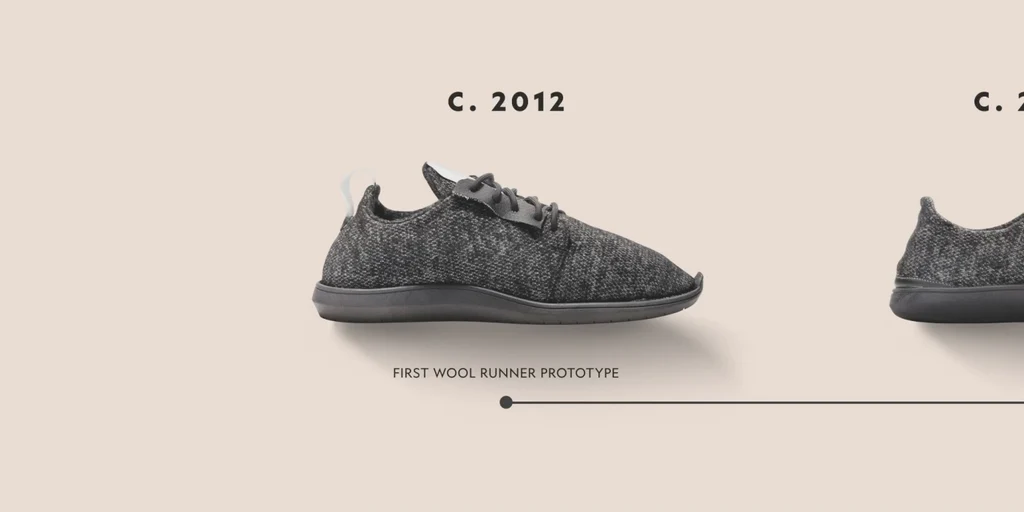
Allbirds is known for using merino wool, eucalyptus-derived Tencel uppers, and SweetFoam™, a bio-based EVA made from sugarcane.
They publish carbon footprint labels on every product, are a certified B Corporation, and commit to supplier transparency throughout their chain
Manufacturer Insight:
There’s a lot to admire in Allbirds’ material-first approach. Their use of sugarcane EVA significantly reduces carbon emissions compared to traditional petroleum-based foams.
Knit uppers made of Tencel or wool are scalable and lightweight, making them attractive for low-waste cutting.
However, these choices come with trade-offs:
- Wool is soft but prone to pilling, and it’s not vegan—something that affects brand positioning for some markets.
- Bio-EVA foams like SweetFoam are less stable under high heat and can age differently compared to traditional EVA.
- Water-based glues used for bonding bio-foams need longer curing times and airflow, and are sensitive to temperature and humidity changes on the production line.
Veja: Ethical Sourcing + Low-Impact Production
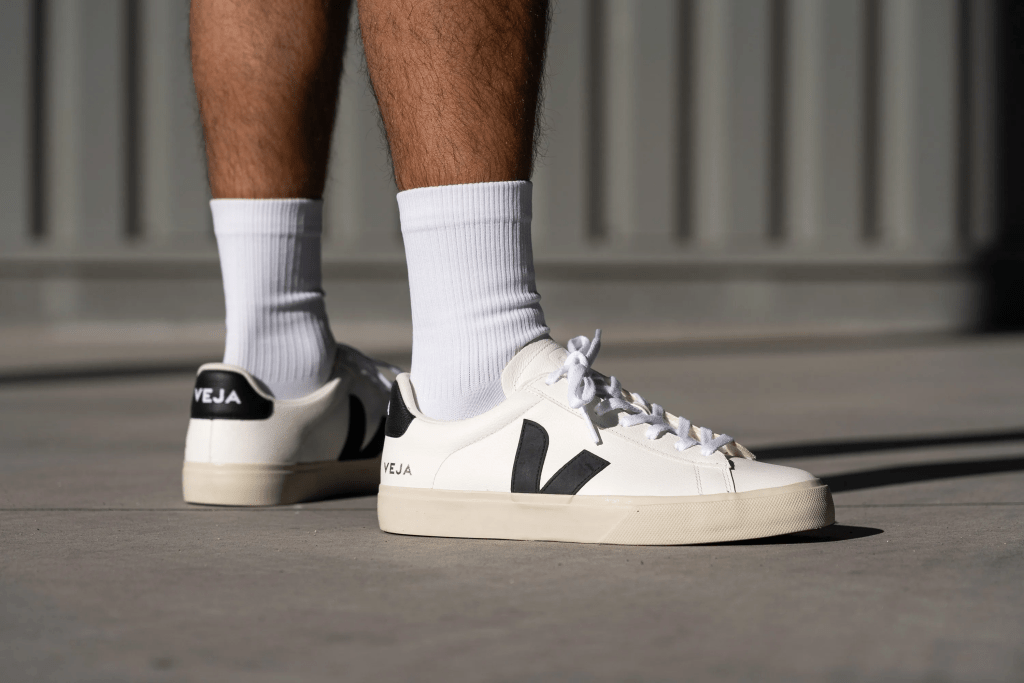
Veja leads with ethical sourcing—from organic cotton grown in Brazil to wild Amazonian rubber and vegetable-tanned leather.
They manufacture locally in Brazil, maintain radical transparency, and hold B-Corp certification. They also invest in recycling co-ops, helping collect and repurpose waste
Manufacturer POV:
Veja’s model shines in social sustainability.
Partnering with small farming communities and Brazilian co-ops allows them to maintain ethical practices and reduce transport emissions. Their designs also tend to be timeless and durable, which naturally limits overproduction.
Still, there are manufacturing challenges:
- Wild rubber from the Amazon is not always uniform. It can vary in elasticity, cost more, and require customized rubber compounding to maintain performance.
- Veg-tanned leather may crack or stiffen during processing, and color variation between batches is common.
- These materials often need solvent-free finishes, which can extend drying times or affect sheen.
Thousand Fell: Circular Design + Take-Back Program
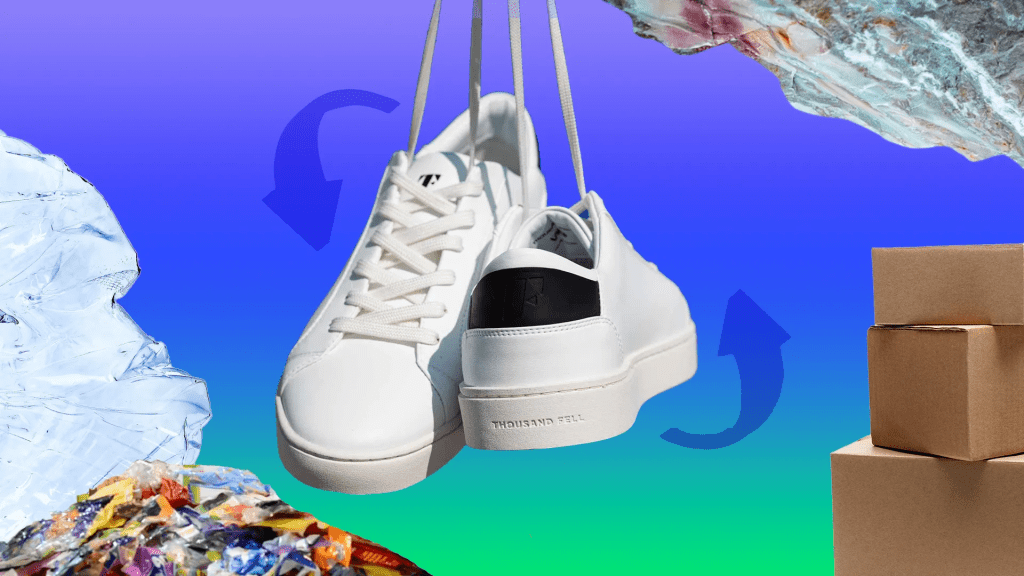
Thousand Fell promotes a fully circular footwear model: shoes that are “made to last and built to recycle.”
They use recyclable polymers, bio-based vegan leathers, and mechanical fasteners to enable disassembly. Their take-back program offers credits to customers who return worn shoes for recycling
Manufacturer POV:
Circularity is the gold standard—but it’s complex to implement.
On the upside:
- Designing with mono-materials (e.g., one type of plastic per part) improves sorting and recyclability.
- Using water-based glues or mechanical fasteners allows for easier disassembly at end-of-life.
- Including part labeling makes automated sorting in recycling plants more accurate.
Challenges include:
- Real-world return rates are often low. Brands need logistics partners to incentivize and collect returns.
- Adhesives must strike a balance: strong enough to hold up during wear but weak enough to allow separation later.
- Material selection impacts performance—bio-based uppers may degrade faster, and mono-materials can limit cushioning or flexibility.
How Tristar Helps Brands Build Truly Sustainable Shoes

At Tristar, sustainability isn’t a marketing line—it’s a manufacturing mindset.
We help brands turn good intentions into great products by building ESG-compliant, material-smart, and circular-ready shoes that scale. Here’s how we do it:
ESG & Compliance
We operate under ISO 9001/14001 and are regularly audited through SMETA and BSCI standards. Our facilities implement zero-waste policies, VOC-reduction programs, and strict worker safety protocols to ensure every shoe is built in a way that’s safe for both people and the planet.
Design & Prototyping for Circularity
From low-polymer constructions to stitch vs glue strategies, we guide brands through early design choices that support disassembly and closed-loop recycling.
Our rapid prototyping system enables quick testing and iteration with reduced waste.
Production Excellence & QA
We integrate abrasion, flex, and peel strength testing directly into production cycles.
Our engineers fine-tune adhesion systems for water-based glues and track batch-level defect data to maximize durability, especially for sustainable materials that behave differently than standard ones.