Every shoe is built like a tiny house for your foot.
Each material choice (leather, rubber, foam, etc.) affects how a shoe feels, lasts, and costs.
A heavy full-grain leather upper will make a shoe strong and long‑lasting, but it’s heavier and pricier.
A lightweight mesh upper makes a shoe cooler and cheaper but may wear out faster.
In short, the materials you pick determine comfort, durability, manufacturability, and price.
What Are Shoes Made Out Of? Parts of a shoe
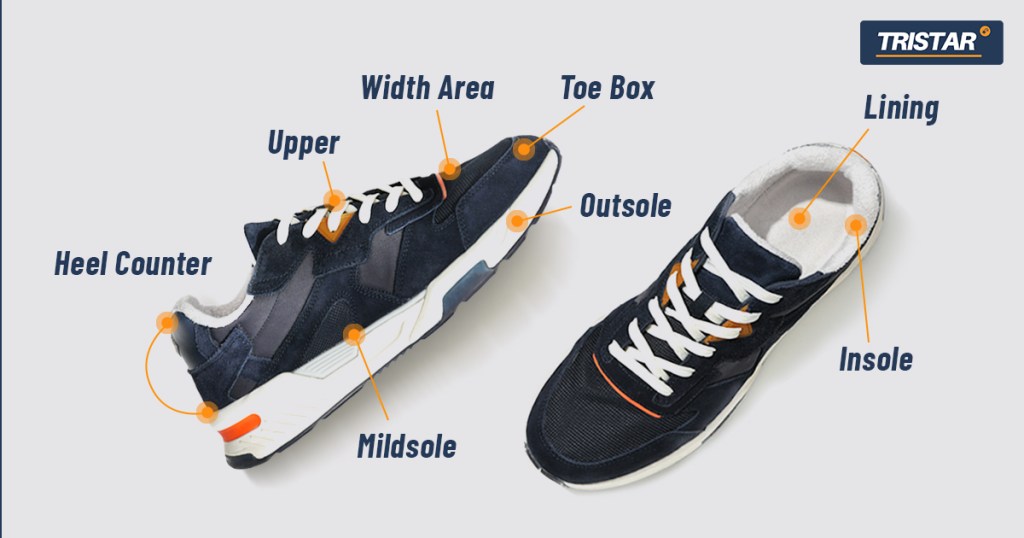
A typical shoe is made of these parts:
- Upper — the outside “jacket” of the shoe that wraps your foot. It can be leather, fabric, knit, or other materials.
- Toe box — the front space around your toes. It should let your toes wiggle and not feel squished.
- Width area — the widest part across your foot (by the ball of the foot). If this area is too tight or too loose, the whole shoe feels wrong.
- Heel counter — the stiff cup at the back that hugs your heel so it doesn’t slip. It helps the shoe keep its shape.
- Insole — the layer your foot stands on inside the shoe. Sometimes it’s removable. It adds soft cushion and can support your arch.
- Midsole — the foam “cushion” between the insole and the ground. It soaks up bumps and gives bounce when you walk or run.
- Outsole — the bottom of the shoe that touches the ground. Usually rubber or plastic, with patterns for grip so you don’t slip.
- Lining — the soft inner fabric against your foot. It makes the shoe comfy and helps manage sweat.
With all these parts, the material choices are huge.
For example, leather uppers give a premium feel and durability, while mesh uppers give lightness and breathability. The materials dictate a shoe’s feel, durability, price, and ease of production.
In the next section we cover the most common materials for each part and what brands should know about them.
Top 10 Shoe Materials
When you’re designing or sourcing shoes, here are the ten most important materials to understand – and what to watch out for with each.
1. Leather (Leather Shoes)
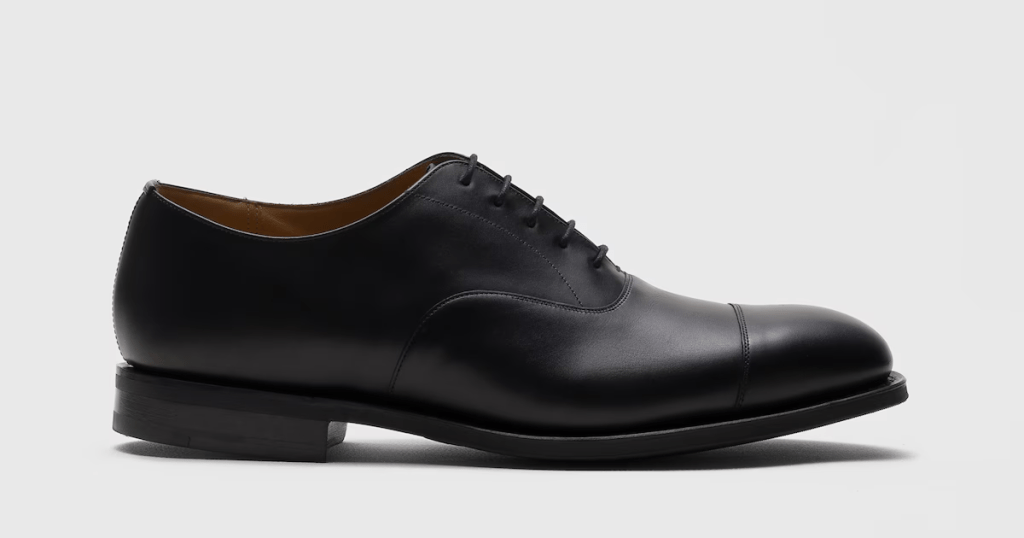
Leather is the classic go-to for quality shoe uppers.
Full-grain leather (often calf leather) comes from the top layer of hide and is prized for strength and a “patina” that develops with age.
It’s strong and naturally breathable, so leather sneakers and boots can last for years.
Many dress shoes and premium casuals use full-grain leather because of its classic look and durability.
- Pros:
- Very strong and supportive; breathes well (better than most synthetics); develops a rich shine over time.
- Cons:
- Heavier than fabric; requires care (cleaning/polishing); expensive.
- Build tips:
- Works with glued or stitched constructions.
- Always define the leather thickness you want — this affects comfort and structure.
- Decide on the finish: glossy for formal shoes, matte for casual ones.
- Sourcing note:
- Ask the tannery about grade (quality level) and finish type.
- Make sure color and texture match across all hides.
- Inspect samples for marks, wrinkles, or uneven color before ordering.
- Common uses:
- Dress shoes, boots, leather sneakers, and other premium casual footwear.
2. Suede
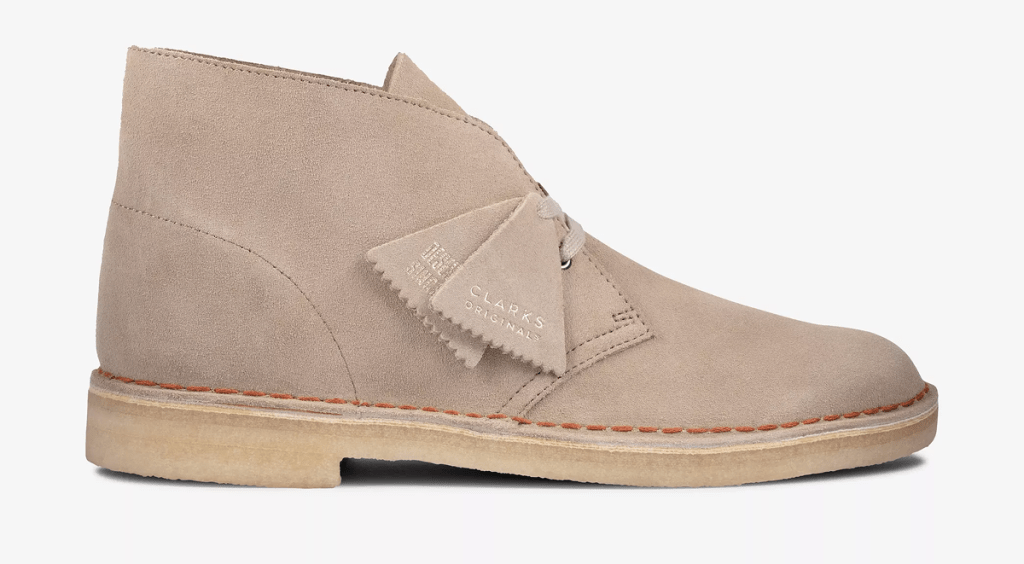
Suede is just leather made from the underside of the animal skin, giving it a soft fuzzy feeling.
Suede is popular for more relaxed styles like chukka boots, loafers, or casual sneakers.
Its fuzzy surface takes dye beautifully, so colors look rich.
- Pros:
- Soft, flexible, and comfortable to wear.
- Holds rich, beautiful colors.
- Cons:
- Not waterproof “lacks the outer skin, [so] it doesn’t hold up to the elements”. Gets dirty easily — water and dust stick to the fuzzy surface.
- Needs extra care and waterproof spray to stay clean and fresh.
- Build tips:
- Avoid using suede on spots that rub or scrape a lot (like heels).
- Remind customers to keep suede away from mud and rain.
- Sourcing note:
- Check for even texture and thickness across hides.
- Suede is usually made from thinner splits of leather — confirm hide type and weight.
- Test that the color doesn’t rub off or fade.
- Common uses:
- Casual shoes like suede sneakers, desert boots, driving moccasins, and loafers.
3. Nubuck (Work Boots)

Nubuck is like suede’s tougher sibling.
It’s top-grain cattle leather (so stronger) that’s been lightly sanded on the outside to create a soft, velvety surface.
It looks similar to suede but is a bit tougher because it’s from the grain side of the hide (not the flesh side). Nubuck gives a premium feel with a matte look. You’ll see nubuck in upscale casual sneakers and boots.
- Pros:
- Soft and velvety but stronger than suede.
- Breathable and durable once waterproofed.
- Feels premium and develops character over time.
- Cons:
- Stains and scuffs easily; not naturally waterproof.
- Can darken when wet, then lighten again when dry.
- Usually costs more than suede because it needs better-quality hides.
- Build tips:
- Treat like leather when making shoes.
- Add protection or overlays on the toe and heel to avoid wear.
- Use coatings or films on areas that get rubbed a lot.
- Sourcing note:
- Check how much the surface is sanded (some are smoother, others fuzzier).
- Make sure the color goes deep into the leather so it doesn’t fade unevenly.
- Common uses:
- Premium casual sneakers, work boots, and lifestyle shoes.
4. PU Synthetic Leather
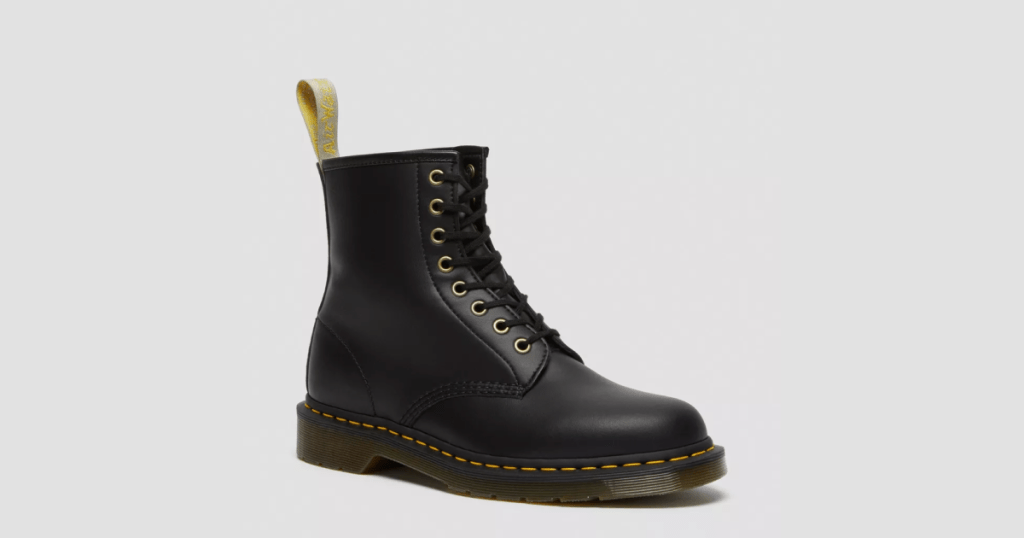
PU synthetic leather is a man-made (vegan) material that looks like real leather. It’s made by putting a thin plastic layer (PU) on top of fabric.
Microfiber leather is a smoother, stronger type of PU leather made with tiny fibers.
Both are soft, light, and can come in any color — but don’t breathe like real leather.
- Pros:
- Looks smooth and even, no natural marks.
- Comes in many colors and prints.
- Water-resistant and easy to clean.
- Cheaper than real leather and animal-free.
- Cons:
- Cheap PU can crack or peel over time.
- Doesn’t breathe well, so feet may feel warm.
- Won’t age nicely like real leather.
- Can smell like plastic and isn’t eco-friendly.
- Build tips:
- Use the right glue and coating type.
- Pick the right thickness and fabric base.
- You can easily print or emboss patterns on PU.
- Sourcing note:
- Check what the PU is made of (just PU or mixed with fabric).
- Ask for test reports if it’s labeled “eco” or “water-based.”
- Make sure color is even across batches.
- Common uses:
- Used in fashion sneakers, kids’ shoes, and affordable everyday shoes.
- Common in vegan or man-made leather designs.
5. Canvas (cotton or hemp) (Converse, Vans)

Canvas is the classic sneaker fabric — like what you see on Converse shoes.
It’s made from woven cotton or hemp, so it’s strong and lets your feet breathe. In fact, the first sneakers in 1892 were rubber-soled shoes with cotton canvas uppers.
People love it because it’s casual, easy to color or print on, and feels light.
But since it’s cloth, it soaks up water unless treated.
- Pros:
- Tough and long-lasting.
- Very breathable that keeps feet cool and comfy.
- Easy to clean.
- Looks casual and simple.
- Cons:
- Gets wet easily and can stain.
- Colors may fade in the sun.
- Not very firm — needs extra support in the heel or toe.
- Build tips:
- Wash before making shoes (it can shrink a bit).
- Don’t glue on waxed or oily parts — glue won’t stick.
- Pick fabric thickness that fits your shoe design.
- Sourcing note:
- Check fabric weight — heavier canvas is stiffer, lighter is softer.
- Test color fading.
- If using hemp, note it’s usually off-white.
- Common uses: Classic vulcanized sneakers and casual slip-ons (think Converse, Vans), summer espadrilles, and any relaxed casual shoe.
6. Knit & Mesh (Nylon/Polyester) (Sneakers)
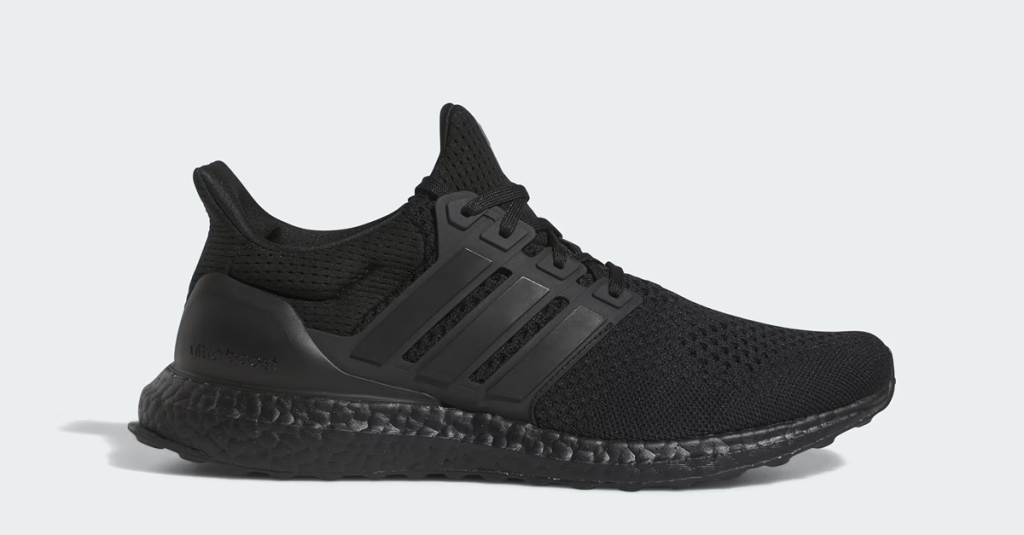
Modern sports shoes often use knit or mesh fabrics for the upper part. Knit uppers (like Nike Flyknit or Adidas Primeknit) are made by knitting yarn directly into shape — no seams.
They fit your foot like a soft sock and can be tighter in some areas for support or looser for stretch.
Mesh (usually nylon or polyester) is a fabric full of small holes that let air flow through, keeping shoes light and breathable.
As one shoe-review site puts it: “if you want comfort, choose knit; if breathability and lightness, choose mesh.”
- Pros:
- Knit: Soft and flexible, fits like a sock, fewer seams so less rubbing.
- Mesh: Super light, very breathable.
- Both can be colorful or patterned and shaped with overlays for structure.
- Cons:
- Knit: Can stretch out after long use or feel heavy on racing shoes.
- Mesh: Tears or frays easily if unprotected; needs extra layers for strength.
- Build tips:
- Add thin TPU or fused overlays for support and durability.
- Tell the factory the knit’s tightness, thickness, and fiber type.
- For mesh, define hole size and whether it needs a backing layer.
- Most knit shoes also add plastic or TPU parts for laces and heels.
- Sourcing note:
- Ask for a knit map (to see which areas are tight or open).
- Check stretch, feel, and color consistency.
- Make sure the fabric can handle the shoe-making heat process.
- Test abrasion resistance for mesh types.
- Common uses:
- Running shoes, trainers, basketball shoes, and sock-like sneakers.
- Also used inside shoes as breathable linings.
7. EVA (Ethylene-Vinyl Acetate) (Foam Sandals)
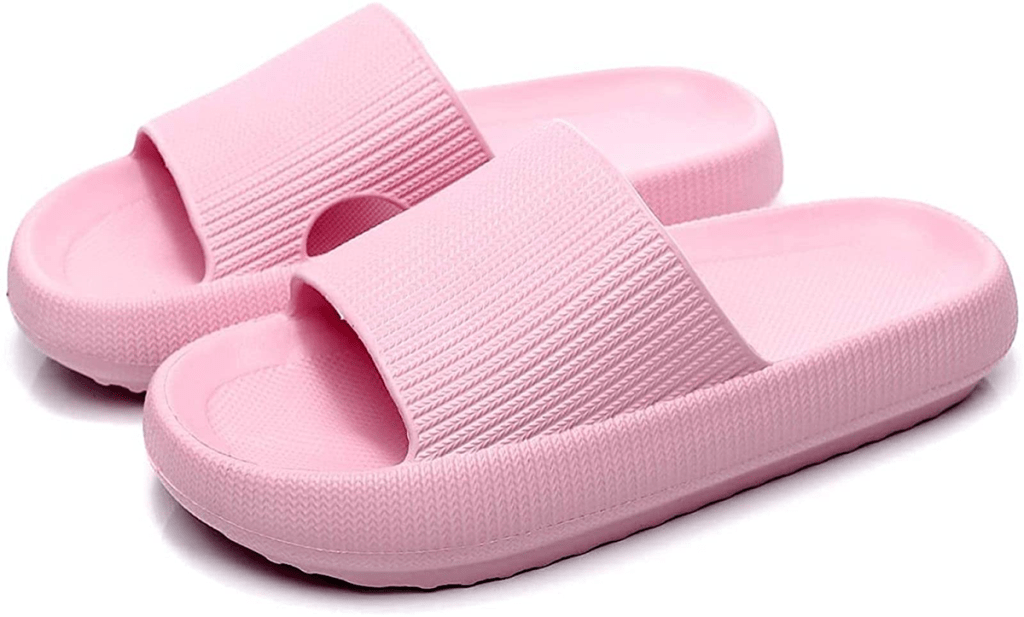
EVA is the soft, bouncy foam found in most sneaker midsoles — it’s what makes shoes feel cushioned and light.
It can be molded into any shape or color, making it popular for running shoes, sandals, and casual sneakers.
- Pros:
- Super light and flexible.
- Great shock absorption and comfort.
- Easy to mold and color for midsoles or footbeds.
- You can change its firmness by adjusting foam density.
- Keeps feet insulated from cold floors.
- Cons:
- Wears out faster than rubber — not ideal as the main outsole.
- Can flatten over time and lose bounce.
- Gets dirty easily because it’s slightly porous.
- Slippery if used alone on the bottom of the shoe.
- Build tips:
- Set the foam density to match your shoe’s comfort level (soft for cushion, firm for stability).
- Add rubber or TPU pods in high-wear areas to extend life.
- Coordinate with the factory for color consistency (EVA takes color well).
- Sourcing note:
- Choose EVA grade based on desired softness or support.
- Ask for consistent color batches.
- Some EVA foams can include recycled or natural materials (like cork).
- Common uses:
- Midsoles of sneakers, running and walking shoes.
- Footbeds in sandals and slippers.
- Lightweight flip-flops and casual footwear.
8. Patent Leather (Dance Shoes)
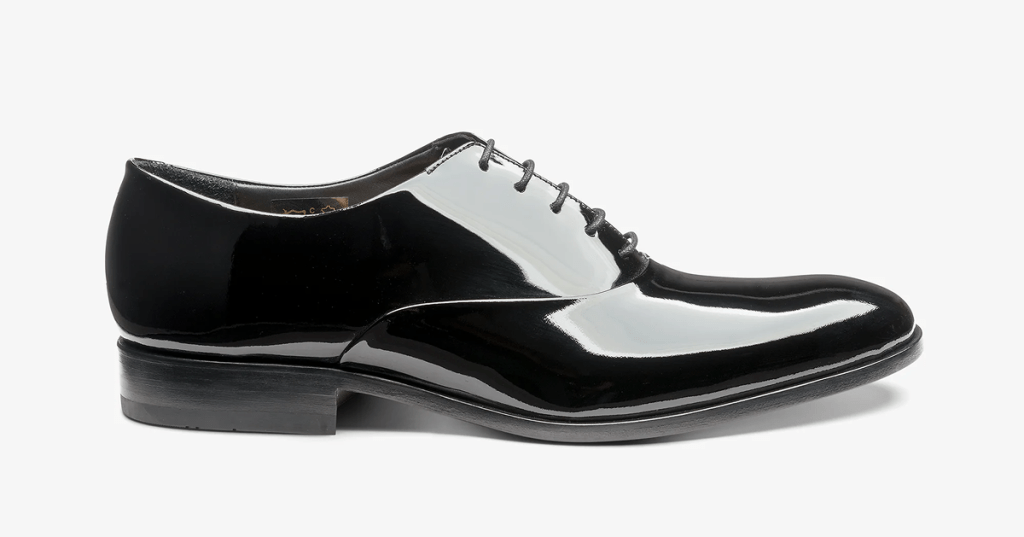
Patent leather is shiny coated leather with a mirror-like finish.
It used to be polished with shellac, but now it’s coated with PU or acrylic film.
The coating makes it look glossy, smooth, and almost waterproof.
A related version, action leather, is split leather covered with a thin PU film — it looks clean and resists water, often used for white sneakers.
- Pros:
- High-gloss shine and very water-resistant.
- Easy to clean — just wipe it.
- Uniform color and finish, hides natural flaws.
- Scuffs can often be polished out.
- Action leather is durable and waterproof.
- Cons:
- Doesn’t stretch or breathe.
- Can crack, peel, or crease if bent too much.
- Scratches show easily on the shiny surface.
- Feels hot and stiff on foot.
- Build tips:
- Keep pattern edges smooth — sharp cuts show easily.
- Avoid heavy bending areas to prevent cracks.
- Use glues made for coated or plastic materials.
- For action leather, confirm it’s “PU film on split leather.”
- Sourcing note:
- Ask for coating type (PU or acrylic) and film thickness.
- Test for scratch and color consistency.
- Check the cross-section to make sure the coating isn’t too thick or soft.
- Common uses:
- Dress shoes (pumps, loafers, oxfords), formal wear, and dance shoes.
- Fashion sneakers or boots needing a glossy, futuristic look.
- Action leather is common in clean white sports sneakers.
9. PU (polyurethane) and TPR (Work boots)
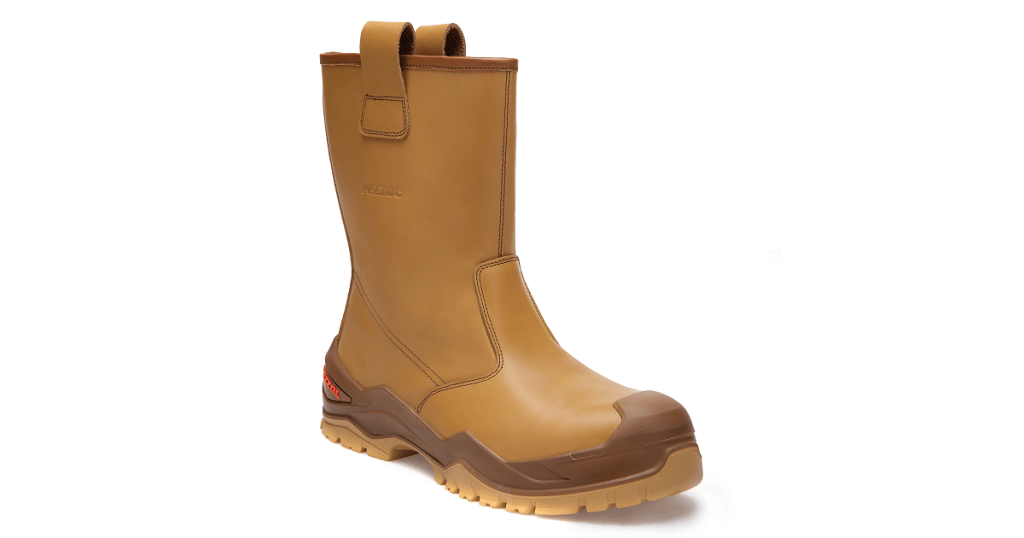
Modern shoe soles are often made from molded plastics — mainly PU and TPR.
PU feels like rubber but is lighter and tougher. It’s often used in work boots and sandals for great wear and slip resistance.
TPR is a flexible, rubber-like plastic that can be recycled. It combines rubber’s grip with plastic’s easy molding.
- Pros:
- PU: Light, durable, and abrasion-resistant. Great for detailed tread designs.
- TPR: Flexible, durable, grippy, and water-resistant.
- Both keep their shape well, are comfortable, and cost less than rubber.
- Cons:
- PU: Can break down in heat or humidity unless it’s a moisture-resistant type.
- TPR: Not as high-end or grippy as real rubber and can get stiff in cold weather.
- Neither gives as much bounce as premium foams. Rubber still lasts longer in tough use.
- Build tips:
- Pick moisture-resistant ether-type PU for hot climates.
- Design tread depth for grip and adjust wall thickness to avoid flimsy soles.
- Add fine grooves or textures for traction.
- Both PU and TPR are made by injection molding, so plan mold shape and angles carefully.
- Sourcing note:
- Ask for compound specs (filler %, durometer, abrasion tests).
- Check PU’s shelf life — it can absorb moisture.
- For TPR, verify hardness and color consistency.
- Test both for hot and cold weather performance.
- Common uses:
- PU: Work boots, safety shoes, fashion sneakers, athletic sandals.
- TPR: Casual shoes, kids’ shoes, and budget sneakers that look like rubber but cost less.
10. Wood & Cork (Birkenstock Sandles)

Cork–latex footbeds (like Birkenstock sandals) use layers of cork, latex, jute, and suede for soft, natural cushioning.
They slowly mold to your foot, giving custom comfort and long-term support.
Wood, on the other hand, is used in classic clogs and platform soles — it’s hard, stable, and gives a timeless, handcrafted feel.
Cork–latex footbeds (like those in Birkenstock sandals) use layers of cork, natural latex, jute, and suede for cushioning.
- Pros:
- Cork–latex: Breathable, molds to your foot, and offers firm support. Feels springy and lasts for years.
- Wood: Strong, stable, waterproof (when sealed), and gives a clean, classic look.
- Cons:
- Cork: Can dry out and crumble over time if not cared for. Feels firm, not bouncy.
- Wood: Heavy, rigid, and doesn’t flex. Can crack or chip if not sealed well. Feels clunky unless shaped correctly.
- Build tips:
- For cork, define how thick each layer (cork, latex, jute, suede) should be. Make sure edges are wrapped neatly.
- For wood, pick strong hardwoods (like beech or alder) and ensure moisture control to prevent cracking. Shape the sole with a slight curve for natural walking.
- Sourcing note:
- Use fine-grain cork for smoother feel and consistent texture.
- Check color and quality of suede covers.
- For wood, confirm grain direction and inspect for warping or poor joins (especially laminated soles).
- Common uses:
- Cork–latex: Sandals, slides, comfort shoes (like Birkenstocks).
- Wood: Clogs, platform sandals, fashion mules, and vintage-inspired footwear.
Your First Sample Run: Get Material Options & Quotes from Tristar
Getting started with your first shoe sample? Don’t stress over materials!
Just send us your design intent and needs, and we’ll handle the rest. Our experienced team will suggest the best materials for each part, estimate likely MOQs (minimum order quantities) and lead times, and point out any risks before you spend a dollar on samples.
Get clean, clear quote – breakdown of costs and timelines up front.