
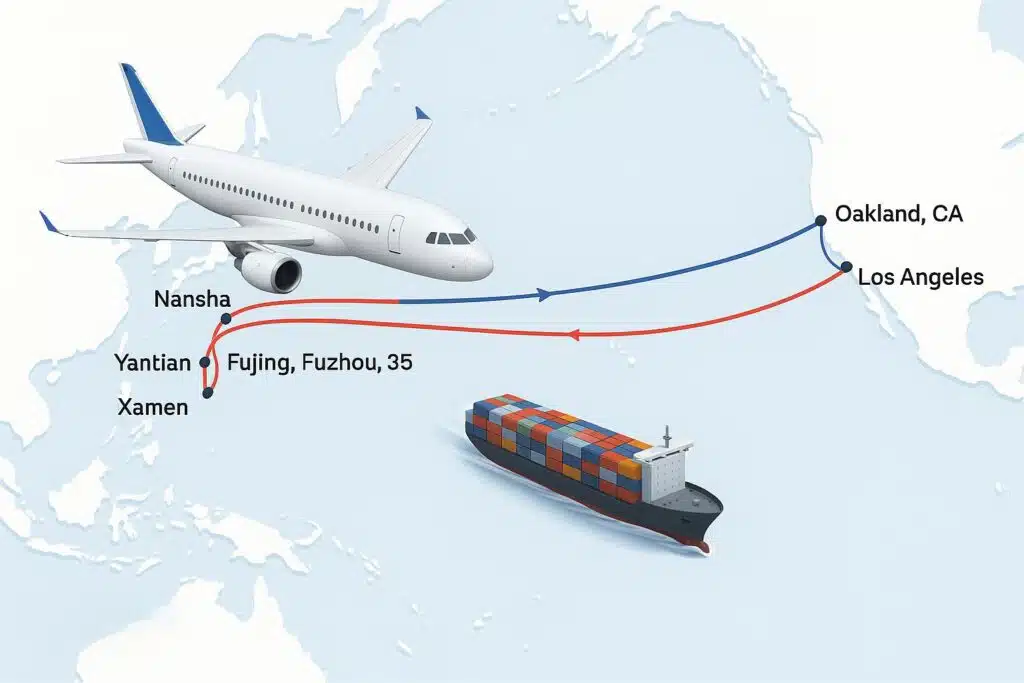
China–US Air Cargo Shifts as Tariffs Hit E-Commerce Shipments
Air cargo demand between China and the U.S. is undergoing major changes as new U.S. tariffs and the suspension of the de minimis rule continue to impact e-commerce shipments. Since May, small-parcel volumes from China and Hong Kong have dropped sharply, leading airlines to cancel or reduce freighter flights on key trans-Pacific routes.
1. Rates Rise Despite Lower Volumes
Although demand initially fell, recent data shows a gradual rebound. According to WorldACD, spot air-freight rates from Asia to the U.S. have increased for six consecutive weeks, reaching around US $5.63 per kg. Tonnage from mainland China also shows signs of recovery, narrowing the steep declines seen earlier in the year.
2. Capacity Shifts Across Asia
As U.S. inbound demand softens, airlines and logistics providers are redirecting capacity to other markets. Freight forwarders report stronger activity on intra-Asia routes connecting China with Vietnam, Malaysia, Thailand, Taiwan and Singapore. Eastbound shipments to Europe have also increased, highlighting a broader realignment of global cargo flows.
3. What This Means for Shippers
- Expect continued rate volatility on China–US lanes
- Peak-season planning is becoming more important as capacity tightens
- Diversifying origin points or routing through Southeast Asia may reduce risk
- Monitoring tariff and trade policy changes is essential for cost control
The air-freight market remains dynamic, but Asia-Pacific demand and pricing trends indicate gradual stabilization as the industry adjusts to new trade policies and evolving global supply chains.

